The Past and Future of Northern Prosperity
.png?width=48&height=48&name=Alison+Dunn+Headshot%20(1).png)
Alison Dunn
As we prepare for the launch of the Society Matters Foundation, I find myself reflecting on a pivotal conversation from May 2024—one that crystallised the stark reality facing our region. Consider this: just 4,600 houses in Notting Hill have accumulated as much in capital gains as the entire cities of Newcastle, Liverpool and Manchester combined between 2012 and 2019. This stark statistic, revealed by Dr Nicola Headlam during our conversation, crystallises a truth about modern Britain's economic divide—and the urgent need for transformation in how we approach regional development.
The Ghost of Progress Past
"If you want to have a bad day, be a northern taxpayer on the Elizabeth Line," Headlam remarks with a mixture of frustration and mordant wit, her voice carrying decades of witnessed inequality. Sitting forward, she gestures emphatically. "When I realised it was the better part of 15 minutes to Reading and it completely transformed what's possible... I was like, we're being taken the piss out of here."
Her words cut to the heart of a persistent reality: whilst London and the Southeast continue to attract massive infrastructure investment, the North watches its potential slip away, month by month, pound by pound.
The Science of Regional Revival
The scene shifts to Oxford in the late '90s, where a younger Headlam stood before the head of Oxfordshire County Council, armed with deprivation maps and data. Her voice takes on a different timbre as she recalls the moment: "Mrs Headlam," the council leader responded, "there is another argument. There's a counter argument to an evidence-based solution like the one that you're presenting. And that's a political settlement."
This tension—between evidence-based policy and political expediency—would become a defining thread through her career. As she explains the Index of Multiple Deprivation, her voice carries the precision of a solicitor and the passion of an advocate: "It has housing, it has transport, it has access to services. It's a holistic look at what could be going wrong in an area."
The Northern Powerhouse: A Brand Without a Blueprint
The fluorescent lights of Whitehall offices cast long shadows as Headlam took the helm of the Northern Powerhouse—a position she would hold for "one year and one day." She inherited an initiative that was more brand than blueprint. "The Northern Powerhouse impetus was incredibly good as a brand," she reflects, leaning back thoughtfully. "However, it was neither a plan nor a strategy."
Her time there coincided with the Brexit wars and Theresa May's government, where she witnessed firsthand how political turbulence could derail regional development. With quiet indignation, she recalls staff members crossing out "Northern Powerhouse" in her speeches and replacing it with "Commuter Belt"—a small but telling indication of shifting priorities.
Infrastructure: The Bones of Progress
Her expertise shines through as she draws unexpected comparisons across Europe. The Netherlands' unwavering focus on Schiphol Airport and Rotterdam Port since World War II, Germany's strategic commitment to Hamburg's deep-water port—these aren't just transport hubs, they're testament to the power of long-term vision.
"The German state backed Hamburg strongly as its deep-water port," she explains, her voice rising with conviction, "and they've been unflinching in that." The contrast with Britain's approach is stark, particularly in light of HS2's cancellation: "HS2 was cancelled at a party conference. It was essentially a press conference. Twenty years of work, gone in a political speech."
The Innovation Paradox
Yet amidst these challenges, Headlam sees unique opportunities. Her eyes light up as she describes Bradford: "Bradford is a cheap city. You can set up, fail fast and fall over. And we're not talking about nepo babies. We're talking about with 400 quid." This affordability, she argues, creates space for genuine innovation that the expensive Southeast can no longer accommodate.
Looking Forward: A Principled Renewal
As our conversation deepens, Headlam outlines her vision for what she calls a "principled renewal" of the North. This framework combines:
-
- A return to evidence-based policymaking
- The "worst first" approach to resource allocation
- Adequate scope and scale for local bodies
- Alignment between infrastructure and governance
- Long-term planning that transcends political cycles
The Path Ahead
As I reflect on this conversation from last May, what strikes me most is how prescient Dr Headlam's insights have proven to be. The same innovative spirit that drove George Stephenson to build the Rocket—which, as she pointedly noted, travelled faster than today's East Coast trains—still exists in our region. The question isn't whether the North can transform itself again, but how we create the tools and trust to do so.
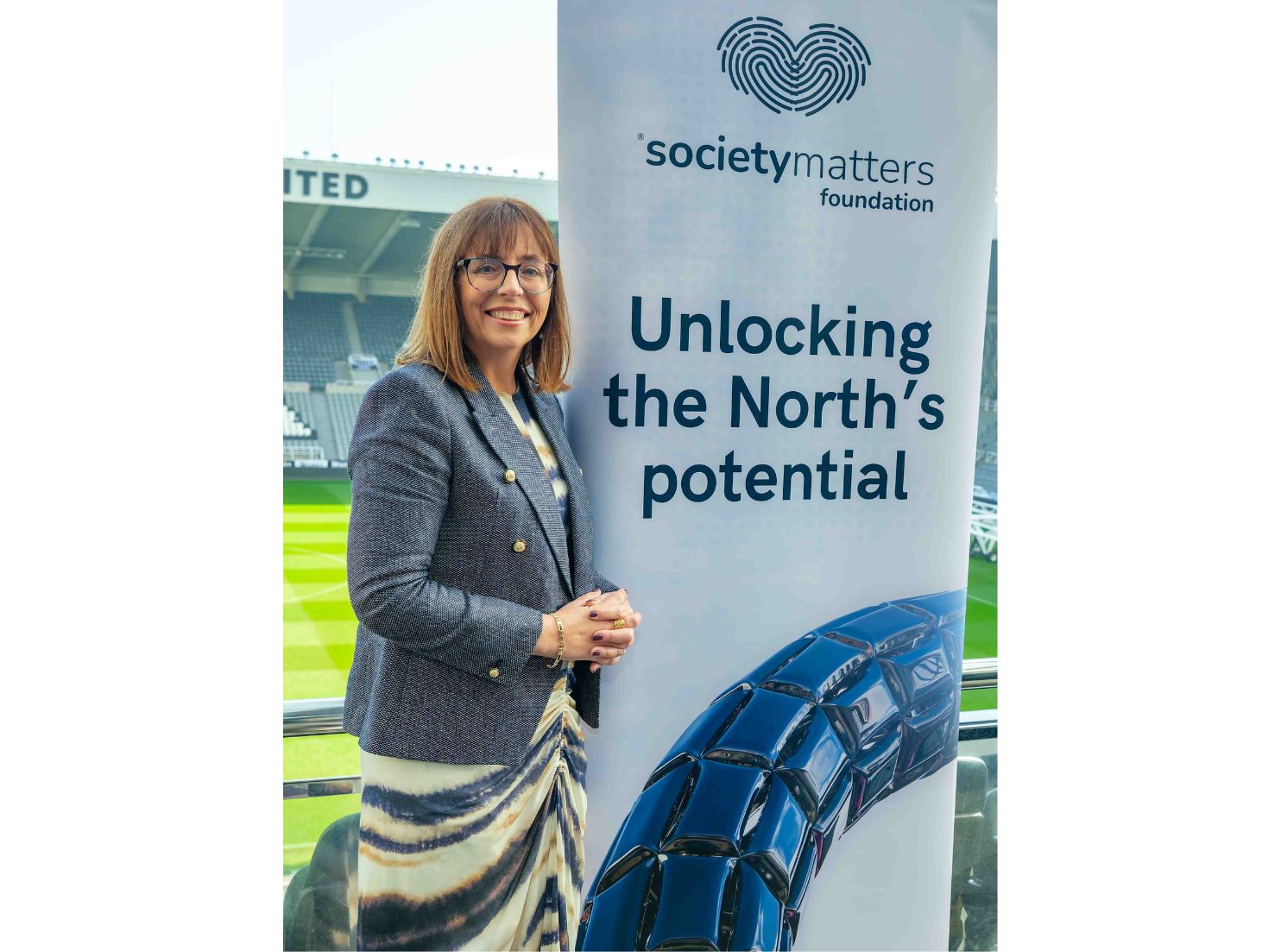
This is precisely why I'm thrilled to announce that we're taking a significant step forward in this journey. On 24th March 2025, at St James' Park in Newcastle upon Tyne, we will be launching the Society Matters Foundation—a natural evolution of the conversations we've been having through This Is The North since 2023.
The Foundation represents our commitment to moving from dialogue to action, focusing on challenging and supporting policymakers to unlock the North's potential. Dr Headlam, whose insights have helped shape our understanding of regional development, will be joining us as one of our distinguished speakers, alongside Mayor Kim McGuinness, Professor Greta Defeyter OBE and Praful Nargund of the Good Growth Foundation. The day will culminate in what promises to be a compelling roundtable discussion, where these thought leaders will be joined by the distinguished Peter George Bell and Jo Tanner, bringing together decades of combined expertise in policy, business, leadership, and transformation.
This gathering isn't just another conference—it's a convergence of the region's most innovative thinkers and doers, coming together to develop progressive policy positions that can transform the North's future. It's about taking the principles Dr Headlam discussed—evidence-based policymaking, strategic planning and principled renewal—and turning them into actionable strategies.
The event has unfortunately now reached capacity, but you can sign up to our waiting list and we'll notify you at least 7 days before the event if any spaces become available. Additionally, you will be notified about our next event so you can sign up that one before all the spaces go!
As we prepare for this next chapter, I'm reminded of how the North has always been a crucible of innovation and possibility. Like the industrial pioneers before us, we're charting a new course for the region's future—one that honours our past while boldly embracing the possibilities ahead.
This article was originally published in February 2025.